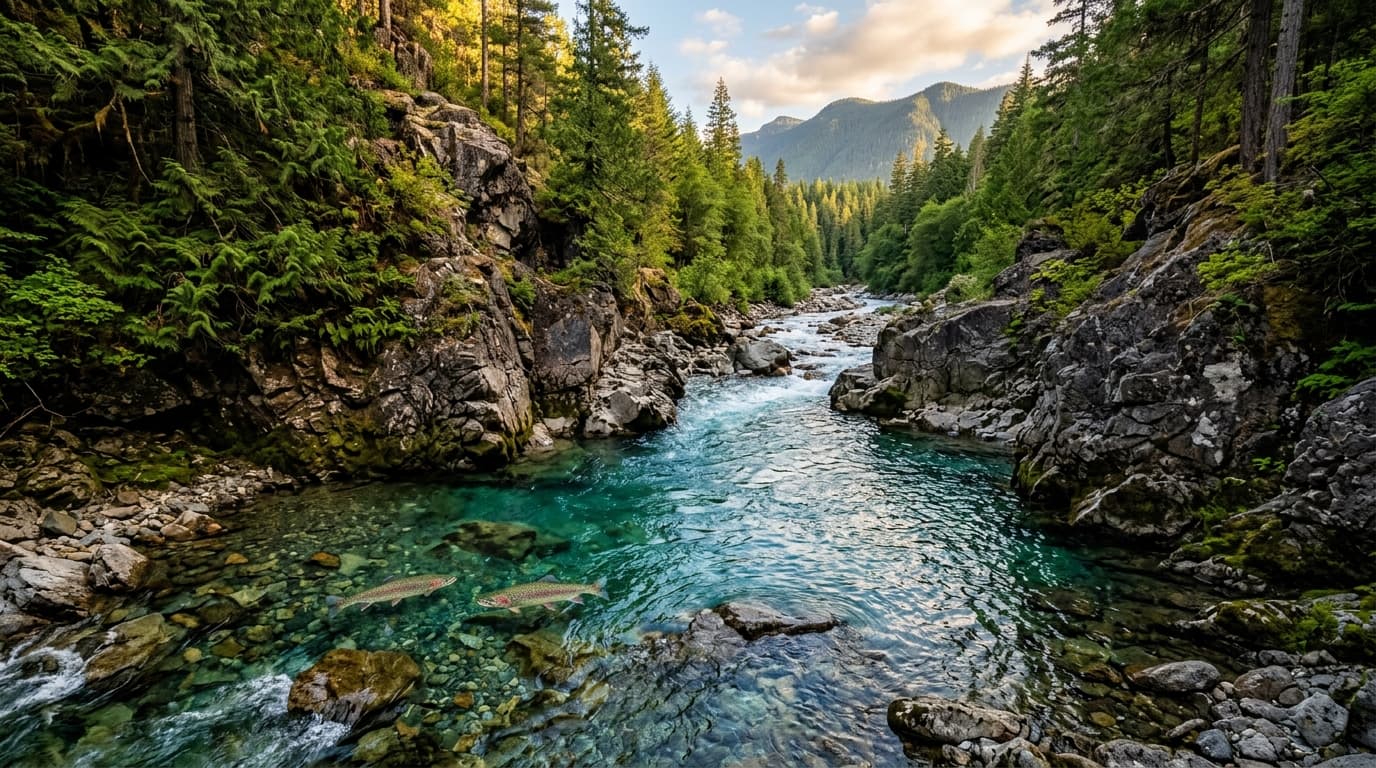
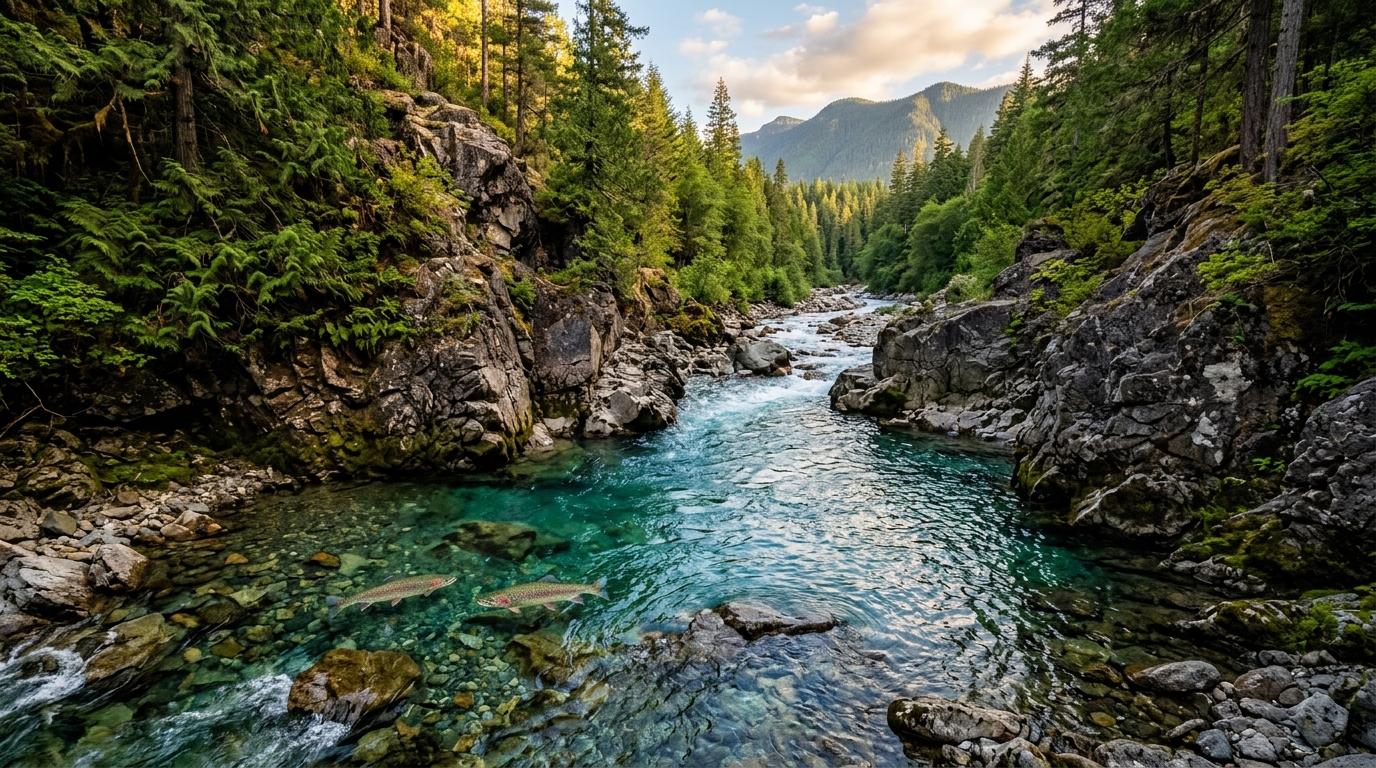
Smallmouth location on a river moves with current flow more predictably than any other variable. Water temperature matters. Structure matters. But flow state — the cubic feet per second moving downriver — dictates where fish position moment to moment. Log it, and you unlock repeatable patterns that make smallmouth fishing far more consistent.
Reading the River's Pulse
The USGS maintains real-time stream gauge data at waterdata.usgs.gov. Search your river by name, and you get the live cubic feet per second flowing downriver. This number changes daily based on rainfall and dam releases upstream. It's the single most predictive variable for smallmouth location — far more useful than general "water level" observations.
Your river has a seasonal baseline. A 2,000 CFS flow in spring is normal; in August it's a flood event. A 300 CFS summer flow is typical; in winter, it's extremely low. Check the gauge's annual history for your location. Know what "normal" looks like for each season. This context matters because smallmouth don't respond to absolute CFS — they respond to deviation from what's normal for that month. A rising river during a stable August changes behavior more than the same CFS rise in April when the river is always rising.
Where Fish Hold at Different Flows
At low flows — say 70% of seasonal baseline — smallmouth hold tight to current. They stack in deep seams behind boulders, in scour holes at the base of drop-offs, along outside bends where current has scoured depth. They're energy-conscious, holding in the prime current seams where food drifts to them without requiring much movement.
As flow rises toward 100–130% of baseline, smallmouth spread laterally. They move to secondary current breaks, wing dams, and slack water behind structure. The river has more food drifting, so fish don't need to hold the prime seam — they spread across secondary holding water that was too slow at lower flows.
Push flow above 150% of baseline — heavy rain or dam release — and fish abandon current entirely. They move to eddies, dead zones, tributary mouths, and slack water inside bends. They're seeking refuge from the push. In high water, fish the edges. The proven fish-holding spots at normal flow may be completely unproductive at 200% baseline.
Logging CFS Locks in Reproducible Conditions
Write down the gauge reading every time you fish. Not a vague "water was up" — the actual number: 1,850 CFS. Log it alongside your location, what you caught, and how long it took.
For effective river smallmouth tracking, log these data points per trip:
- Date and time
- Gauge reading in CFS (check waterdata.usgs.gov before leaving)
- Percentage of seasonal baseline (calculate from historical gauge data)
- Water temperature
- Location and specific structure (boulder seam, wing dam, tributary mouth)
- Catch rate per hour at each location
- What presentation worked
After two seasons of data, you can predict the bite. Next May, check the gauge on the drive in. If it reads 1,200 CFS — matching your notes from a productive day two years ago at the same flow — go to the same location and fish the same way. You're replicating conditions that worked, not guessing based on a general sense of river level.
Most river anglers know instinctively that "high water pushes fish to the bank." They just never log the specific CFS number that separates "high" from "normal," so they can't predict when the pattern flips. The angler who logs CFS at every trip builds an effective river playbook that improves every season.
Check your gauge on your phone before you leave the house. Start logging CFS data in Bield: Fish at bieldfish.com and build the flow history that tells you exactly where smallmouth hold on your river at every flow condition.
Key takeaway: CFS is the most important variable in river smallmouth fishing, and almost no one tracks it precisely. One season of flow-logged catch data will teach you more about your river than five seasons of untracked fishing. Get started today.