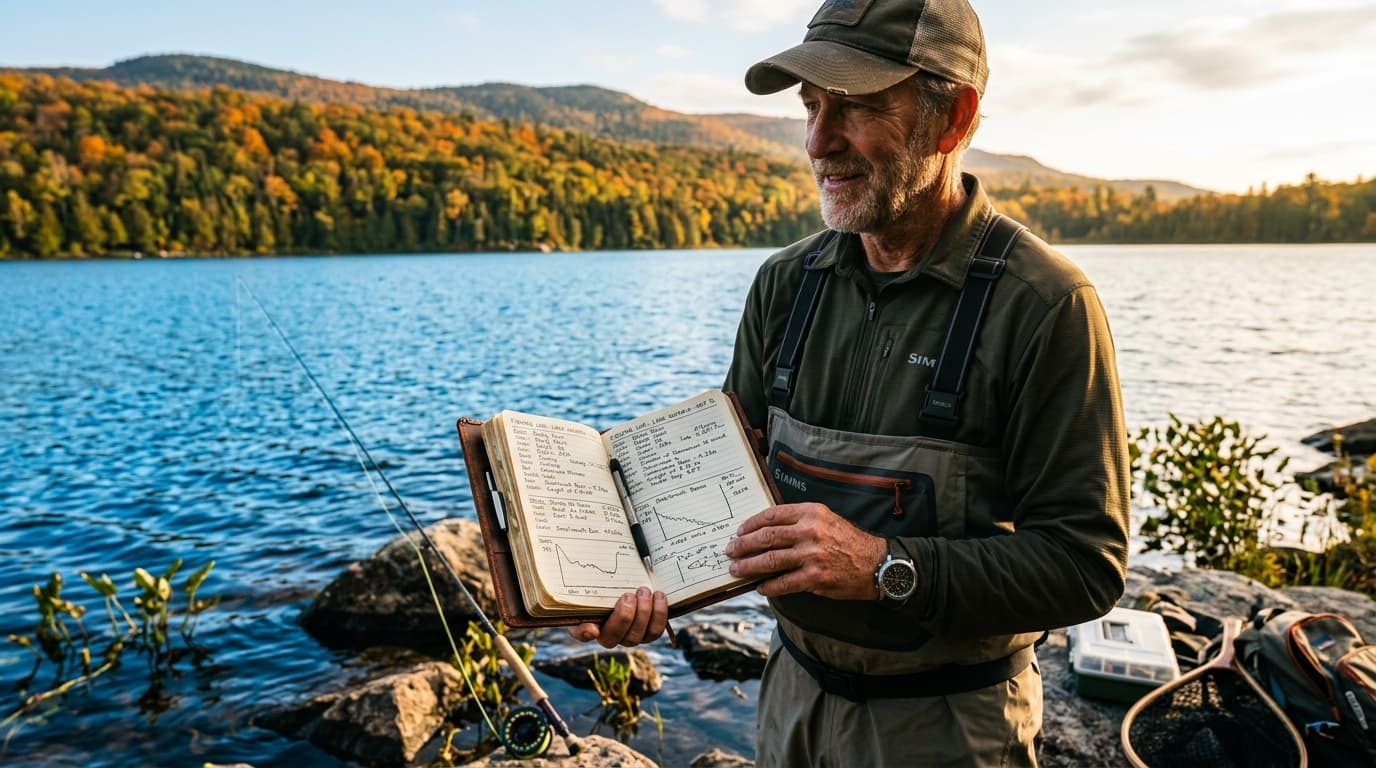
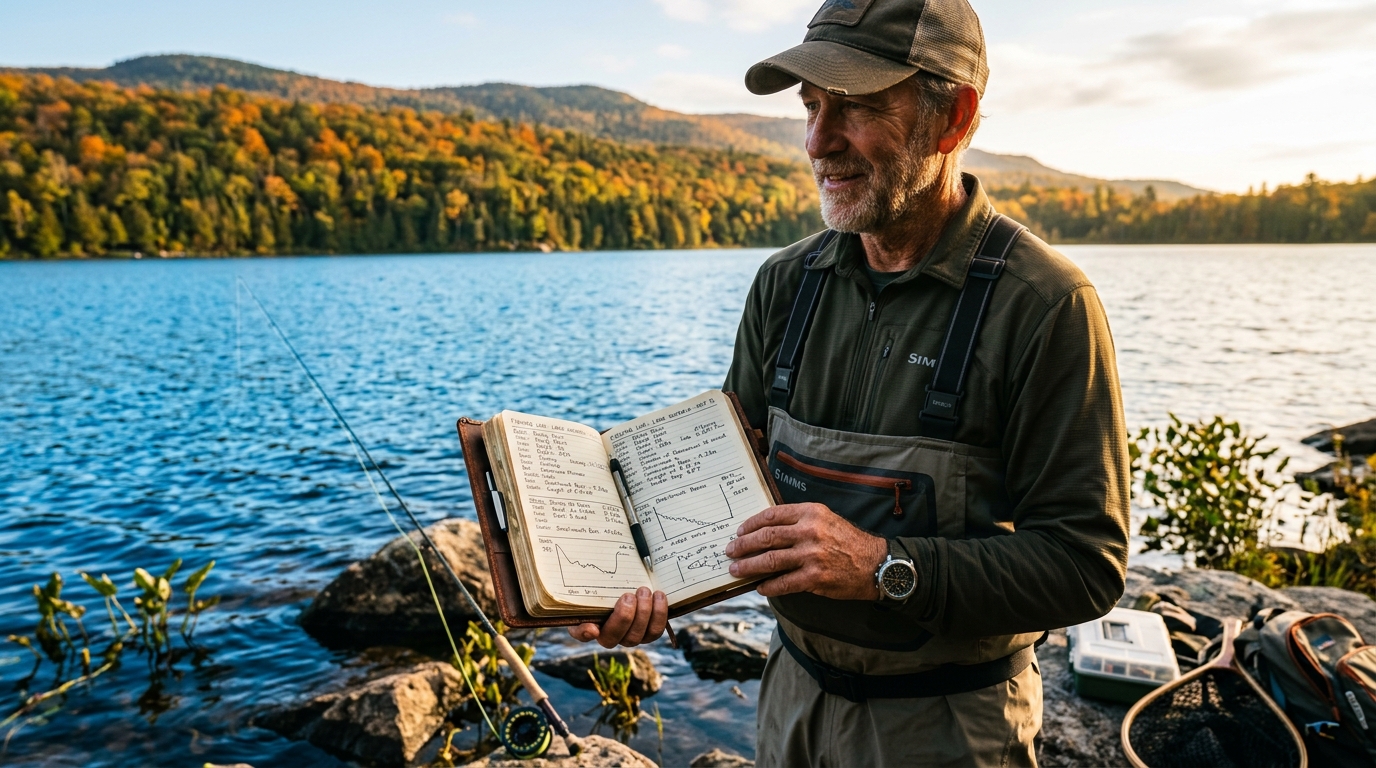
Your total fish count is a false signal. It tells you nothing about pattern or productivity — only how long you were on the water. Catch rate per hour separates actual performance from session length noise, and it's the single most important shift you can make in how you log fishing data. Two anglers fishing the same lake on the same day can each catch 6 fish and have entirely different results when you measure what actually matters.
The Problem With Total Count
Session length varies wildly across your year. A Saturday morning run might be 3 hours; a weekday afternoon, 6 hours; a full-day push, 10 hours. If you log "6 fish caught" without noting hours actively fishing, you can't compare that day to any other. Six fish in 2 hours (3.0 fish/hour) is a screaming bite worth repeating under identical conditions. Six fish in 10 hours (0.6 fish/hour) is slow fishing that reveals nothing worth chasing.
This is why fishing apps that only track "total fish caught" build the wrong metric. You end up with a journal entry, not intelligence. You can read "great day — 8 fish" next summer and have zero way to know whether conditions were exceptional, your presentation worked, or you simply spent more time on the water than usual.
How Catch Rate Reveals What Actually Works
Dividing catches by hours fished normalizes across different session lengths. A 3-fish morning in 2 hours (1.5 fish/hour) beats a 6-fish day in 10 hours (0.6 fish/hour) every time. Once you measure catch rate instead of total count, you stop chasing days where you "caught a lot" and start chasing conditions where the rate was high.
More importantly, track catch rate per location — not "1.2 fish/hour on the lake" but "1.2 fish/hour at the north end, 0.4 fish/hour at the south basin." This is where proven pattern intelligence lives. Your most productive spot might not be your comfortable spot. Your instinctive go-to water might run 0.3 fish/hour while a spot you visit once a season runs 2.1. You only know this if you log rate per location consistently.
Conditions Must Attach to Catch Rate
A 1.5 fish/hour rate at dawn in 55-degree water with a 3-knot southeast wind is not the same as 1.5 fish/hour at noon in 62-degree water, calm, and full cloud cover. Log the conditions at the time of each catch or at each location change:
- Water temperature at your fishing depth
- Air temperature and sky condition
- Wind direction and approximate speed
- Time of day for each location block
- Tide stage or river flow if applicable
- Moon phase for night-fishing patterns
Apps and spreadsheets that force you to estimate "overall conditions for the session" waste this signal. You need conditions tied to specific location and time blocks — not a single summary entry.
Building Your Rate Baseline
Spend one full season logging catch rate by location with conditions attached. By the end you'll have a proven map: "North basin with southeast wind, 58–62°F water = 1.8 fish/hour. South end with calm conditions, 65°F+ = 0.3 fish/hour." Next year, when conditions match a high-rate pattern from your notes, you know exactly where to go before you leave the dock.
The angler who tracks rate per hour and logs conditions doesn't guess. They compare today's conditions to historical data and fish the locations that have produced under identical circumstances.
Start logging catch rate in Bield: Fish at bieldfish.com. Find out which locations on your water actually produce at the highest rate — and which ones you're fishing out of habit. The data will almost always surprise you. Get started this week and build the fishing record that makes every future session more effective.
Key takeaway: Total catch count is noise. Catch rate per hour, tracked by location with conditions attached, is the most effective metric for building repeatable fishing success. One season of rate logging is worth five seasons of untracked fishing.